Category: Uncategorized

  • Shareholders of the Irkutsk Oil Company (INC) Booked a Wavelberg Hotel in St. Petersburg

    December 9, 2019 (kommersant.ru)

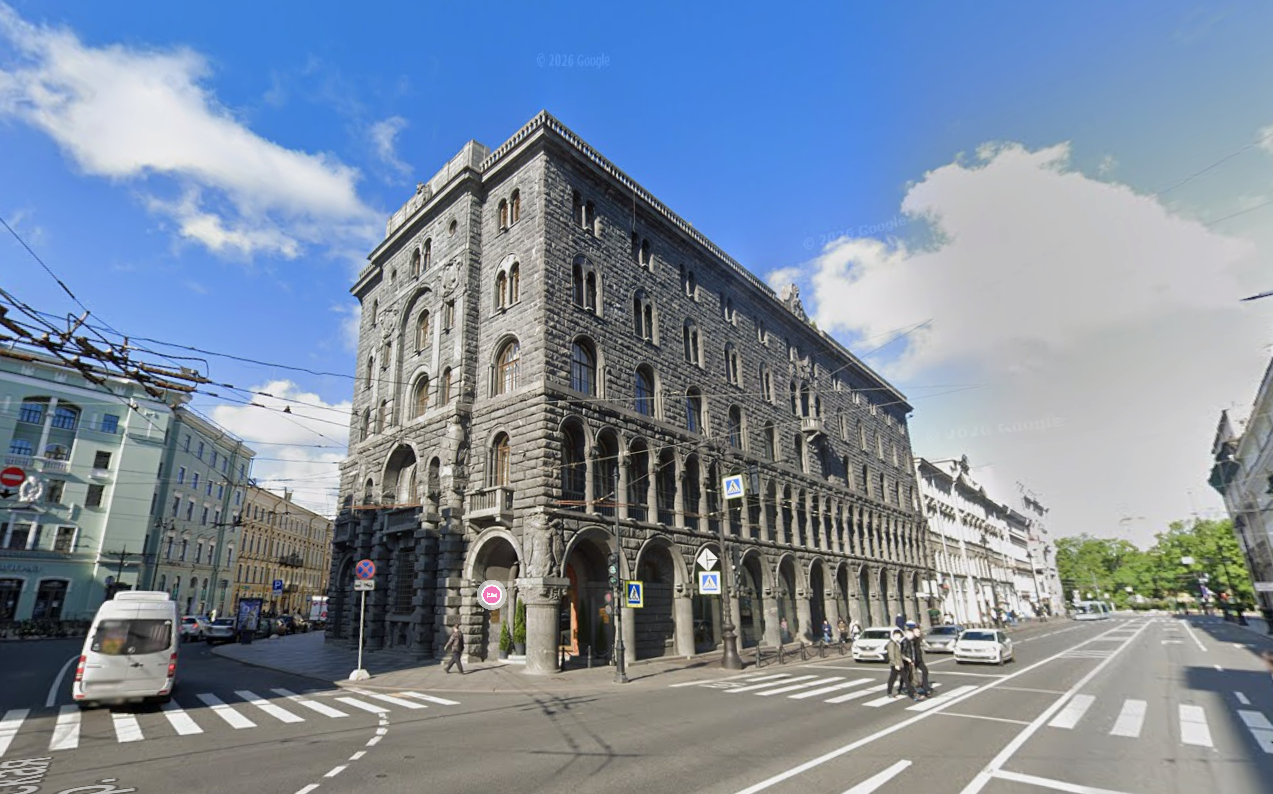
    The major shareholder of the Irkutsk Oil Company Nikolay Buynov and his partners became the sole owners of the project to reconstruct the building at 7-9 Nevsky Avenue under luxury hotel. In 2017, 68% of LLC Project 5-7 became owners of the related structures, and this fall another 32% of the company, which previously belonged to a Sberbank’s subsidiary, was acquired. Kommersant sources assume that the investor initially agreed with the bank to purchase 100% project shares, but the deal was divided into several stages.
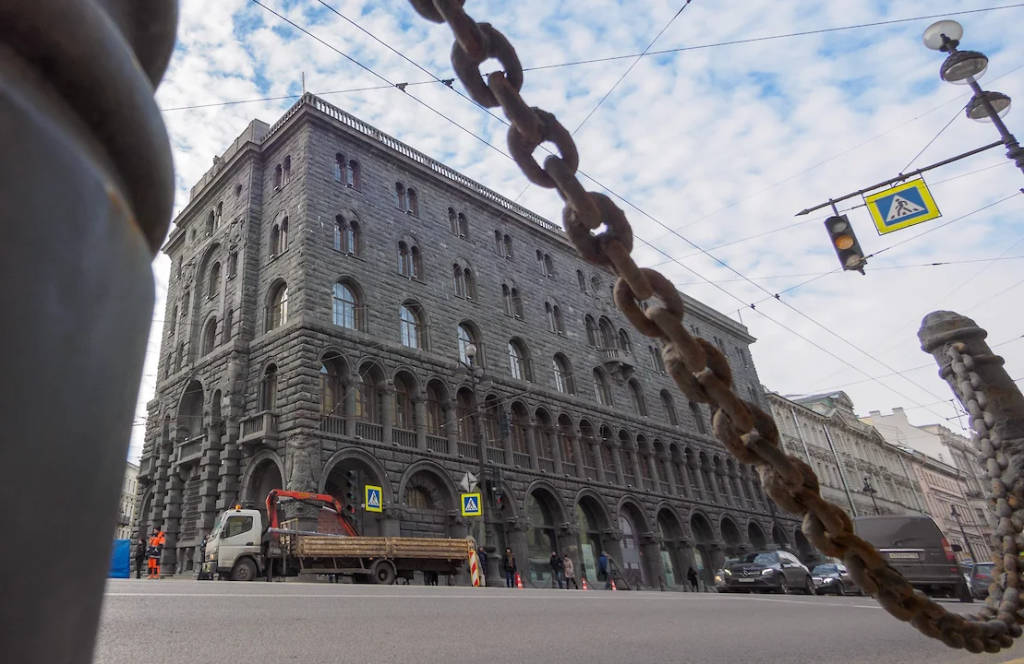
    LLC Prior-Nedvizhimost owned by Nikolay Buynov and his partners became this autumn  the sole owner of the LLC Project 5-7 company, which is sole owner of LLC IFG-Basis-Proekt (an investor in the construction of a hotel at 7-9 Nevsky Avenue).

    Information about this fact was specified in online business information system “SPARK-Interfax”. Previously, companies close to INC shareholders got 68% shares in “Project 5-7” LLC, and another 32% was owned by Sberbank Investments Limited (Sberbanks’ subsidiary).

    Nikolay Buynov and his partners became the main owners of the hotel project in Nevsky in 2017 by purchasing a stake in the project from Sberbank Investments Limited. A source familiar with the project suggests that the agreements between the parties initially provided for the exit of Sberbank from the project. “Sberbank often sells an investor a share in the project, and then gives him the opportunity to buy the remaining minority share at a certain price,” he said.

    According to the Kommersant interlocutor, the deal indicates that the structures close to  the owners of the INC have fulfilled their obligations under the project. The Bank refused to comment, the INC did not respond to Kommersant’s inquiry. Vice-President of Becar Asset Management Olga Sharygina estimates 32% of the project at 1.2 billion rubles. A Kommersant source on the St. Petersburg banking market notes that such transactions are often cashless. The main motivation for the bank at their conclusion is to close the problem loan, not to make a profit, he explains. “Most likely, Sberbank immediately agreed on the terms of exit from the project, binding it to certain covenants. It needed to make sure that the investor would meet some of the conditions. In this situation, we may be talking about town planning stories such as obtaining permits,” the Kommersant’s interlocutor explains.

    Reconstruction of the Wavelberg house has been going on for nine years. In 2010, the historic building on Nevsky Avenue with the area of 9.1 thousand square meters was granted to LLC IFG-Basis-Proekt. At that time company was owned by Aplerson Holding Limited, an offshore Cypriot company. By 2014, the investor planned to complete the project and agreed regarding hotel management with the Jumeirah Group. But ex-owners could not finish the project.

    According to a source of “Kommersant” newspaper, this was due to the fact that the company had difficulties with servicing the bank loan after the devaluation of the ruble in 2014. In 2016, the project ownership was transferred under the control of the Sberbank.

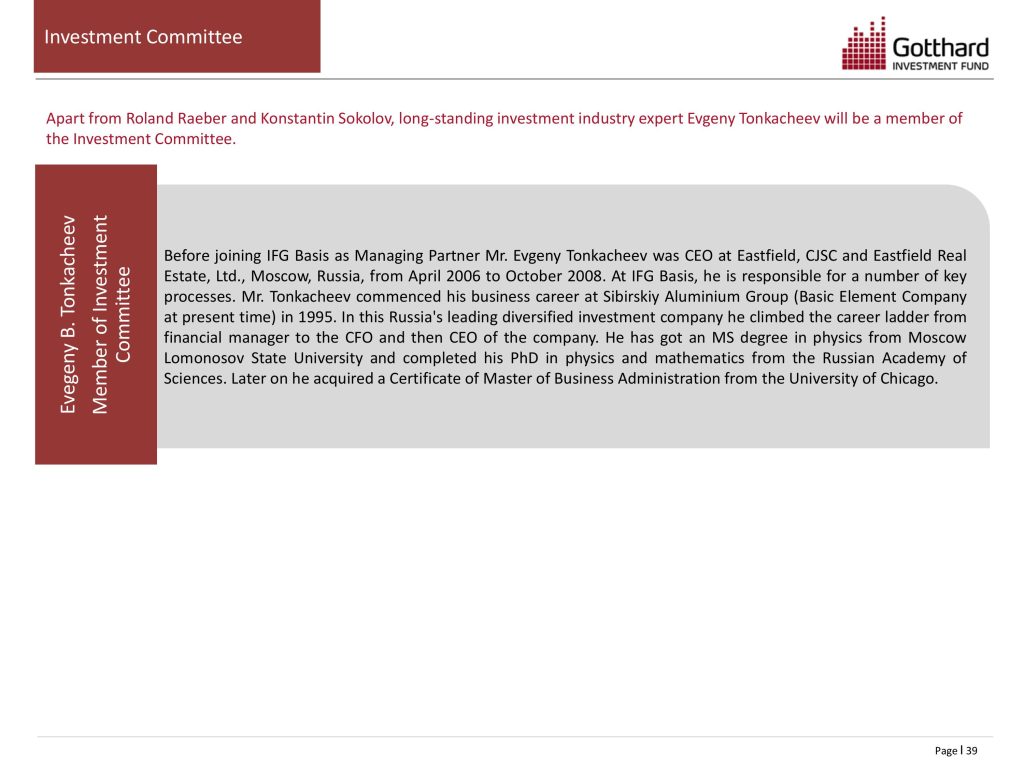
    According “Kommersant” source, “Aplerson Holding Limited” was a division of IFG Basis (see “Kommersant” from 31. 07. 2014). Kommersant sources declare that IFG Basis was associated with Konstantin Sokolov and former Managing Director of Basic Element Evgeny Tonkacheev.

    Evgeny Tonkacheev denied his involvement in the project. According to “Kommersant” source, the Liechtenstein alternative investment fund Gotthard Umbrella Fund (GUF) / Gotthard Investment Fund was involved in the hotel project. According to the GUF report for 2018 hotel on Nevsky was part of the portfolio of the fund along with a hotel on the Fontanka embankment, 145, a shopping mall on Prosveshchenie 80, and the company “Kompressor Komplex”. According to the document, GUF completed the sale of two hotel projects in the first quarter of 2019 and now has no relation to them. It is interesting that the second project, in which the Fund participated, also went to structures close to the shareholders of

    INC (see “Ъ” from 12. 03. 2019). According to www.kartoteka.ru, the deal took place in late 2018.

    The structures close to INC shareholders expect to complete the reconstruction of the Wavelberg house by the end of 2019 – beginning of 2020. By this date, a five-star hotel with 78 rooms should appear here, Sergey Serpenev, a representative of

    IFG-Basis-Project, told Kommersant. According to newspaper “Delovoy St. Petersburg”, to expand the room stock in March this year the company purchased apartments in the outbuilding of the house at 5, Malaya Morskaya Street, with a total area of about 1.1 thousand square meters.

    Credit: https://www.kommersant.ru/doc/4187400

  • Key Points From Deleted Article: A Сase of Fraud of Millions of Euros in Cyprus

    April 22, 2018 (24h.com.cy)

    Russian businessmen used Cypriot companies to get millions from investors 

    A case of fraud of an amount above 2,5 million euros is in Cyprus courts focused on a Canadian investor and two Russian businessmen that have secured a large amount of money as an investment in a company based in Cyprus and since then they appear to have defrauded the Canadian, who is asking to liquidate the Cyprus company in order to note the exact amount of the fraud.

    The case that took place in a labyrinthine complex of companies and funds fromLichtenstein that ends up in the Cyprus company Posparon Investments Limited, for which the liquidation application has been made in court and in which the directors are the two Russians Olgа Kаtоrаychik and Iliа Sоkоlоv.

    Russia-Cyprus-Lichtenstein triangle

    The two managers convinced the Canadian through a fund that was registered in Lichtenstein to invest 2,5 m. dollars in the Russian company “Kompressor Komplex” which was initially oriented to production of centrifugal compressor machines, reducers and spare parts, to be used in gas, oil, chemical, metallurgical and other branches of heavy industries. In addition, in the agreement that was signed, Posparon Ltd appeared to possess 80% of “Kompressor Komplex”, but according to the liquidation application, Posparon only has 100% of the Cyprus company Wellinom Holdings Ltd, which has the same directors as Posparon, ms. Olgа Kаtоrаychik and Iliа Sоkоlоv.

    The two directors, according to the case that is in front of the Cyprus justice system, showed the investor that there was an adjustment of the reasonable value of the investment by 8 m. dollars, without having shown the financial statements of the subsidiaries of Posparon Ltd, which had an objective value and operations. Also, according to the Cyprus audit firm, whose name is at the disposal of 24h.com.cy, the adjustment of the investment was reasonable, as the net value of the assets of the subsidiary company of Posparon Ltd increased.

    In 2014, Iliа Sоkolоv finally sent the financial statements to the Canadian investor and his lawyers, but the explanations provided to increase the value of the subsidiary of Posparon Ltd didn’t satisfy the investor, as it wasn’t clear how the increase of the value of the investment in Wellimom or the subsidiary Agro or the Russian company Kompressor Komplex. The explanations provided via e-mail the Russian managers of the companies made things even more complicated, as the Russian company, the subsidiary of the Cyprus, had taken a long-term loan of 35 m. dollars approximately from a Russian bank and this loan was the reason the value of the mother company increased in the end.

    Konstantin Sokolov behind Kompressor Komplex

    After all that, the Canadian that was reasonably shaken asked for a meeting with the Russian directors Olgа Kаtоrаychik and Iliа Sоkоlоv but also the final beneficiary, Konstantin Sokolov, to ask for explanations for the suspicions of fraud he had as well as the forgery that took place with the financial statements. Konstantin Sokolov ensured the investor that from now on he would get up-to-date information personally from Mr. Konstantin Sokolov regarding the course of his investment.

    They tried to cover up the forgery Finally, until 2017, the investor did not receive any substantial information and in spite of the constant attempts of his lawyers to find out the truth, the Board of Directors of the Cyprus company Posparon Ltd, meaning the two Russian directors not only did not investigate the matter, but they also moved forward to convene a general assembly with a subject to reapprove the audited financial statements of the Cyprus company without giving any other explanation on why the reapproval of the financial statements was necessary for Posparon Ltd for the years 2013 and 2014.

    In the application for the liquidation of the company, it is mentioned that the Canadian investor considers that there are serious indications of mismanagement and possible inappropriate diligent administration on behalf of the Board of Directors and that the operations of the company were done with deception, with the “help” of the Cyprus audit firm that was used by the Russian directors. 24h.com.cy will continue its investigation on the involvement of Cyprus audit firms and/or legal offices in this case that has larger implications.

    Credit: https://24h.com.cy/2018/04/a-case-of-fraud-of-millions-of-euros-in-cyprus/ (dead link)

  • Irkutsk Oil Company Occupied 145b, Fontanka emb.

    March 12, 2019 (kommersant)

    The company’s shareholders are implementing a second hotel project in St. Petersburg.

    Kommersant has learned that shareholders of the Irkutsk Oil Company (INK) have expressed interest in the reconstruction of the Shagin House on the Fontanka Embankment into a three-star hotel. According to Kommersant’s sources, individuals associated with them last year took ownership of the hotel project, which has been stalled for over ten years. This is the second project in the St. Petersburg hotel industry with ties to INK’s owners.

    The construction of a hotel at 145B Fontanka River Embankment, Building A, will be financed by INK shareholders, a source familiar with the situation told Kommersant. This information was confirmed to Kommersant by Philip Apostol, CEO of Apostol’s Architectural Workshop LLC (which is developing the project concept). Mr. Apostol explained to Kommersant that a three-star hotel with up to 150 rooms is planned for the historic building. If the design allows, it could be a four-star hotel, another Kommersant source clarified.

    According to Kommersant’s source, entities associated with INK shareholders became owners of the hotel project late last year. Mr. Apostol provided Kommersant with similar information. According to kartoteka.ru , the company implementing the project, Nezhiloy Fond Consult, is owned by Cyprus-based Fraiser Development. A Kommersant source close to the project dismisses this information as incorrect, stating that Nezhiloy Fond Consult is currently owned by a private individual associated with INK. The change in the project’s ownership is indirectly evidenced by the change in the general director of Nezhiloy Fond Consult JSC in November 2018. At that time, Alexandra Serpeneva became the company’s new director, whose last name and patronymic match those of Anna Serpeneva, the general director of IFG-Bazis-Proekt LLC (the investor in the luxury hotel project at 7-9 Nevsky Prospekt, whose primary owner, through a chain of companies, is Nikolay Buinov, founder of INK. INK did not respond to Kommersant’s request.

    NK is Russia’s largest independent company, not part of any vertically integrated oil holdings. The company explores and produces hydrocarbons in the Irkutsk Region, Yakutia, and Krasnoyarsk Krai. Last year, the company produced 9 million tons of oil and gas condensate. The company’s main shareholder is Nikolai Buinov, whose net worth is estimated by Forbes at $2.2 billion.

    Yunis Teymurkhanly, owner and general manager of the Helvetia Hotel, estimates that investment in the project could reach $10-12 million (660-800 million rubles at the current exchange rate). Ekaterina Teyder, director of development at Becar Asset Management, estimates 670-710 million rubles if the hotel opens under an international brand. Without a foreign operator, the investment would be lower, she notes.

    The reconstruction of the Shagin House into a hotel dates back over ten years. According to the first version of the investment agreement, the company “Nezhiloy Fond Consult,” which received the building from the city in 2008, was required to complete the project within 40 months. When it became clear that the work would not be completed on time, Smolny extended the agreement until 2015. During the project’s implementation, the city attempted to terminate the agreement with the investor, citing failure to fulfill its obligations, but lost in court. Market participants linked “Nezhiloy Fond Consult” to former Vice Governor of St. Petersburg Yuri Molchanov, although he denied this information. The maximum area of ​​the hotel after reconstruction is not to exceed 7,300 square meters.
    Construction of the hotel hasn’t begun yet; design work is currently underway, according to one of Kommersant’s sources. Another Kommersant source said the project’s parameters will comply with the investment agreement, and the construction phase will take no more than two years. The building is “in a terrible state and contains numerous hazardous elements,” notes Mr. Apostol. The Property Relations Committee told Kommersant that the investment agreement is valid, and the construction permit is scheduled for August 2019, with the occupancy permit scheduled for July 2021. The Investment Committee did not respond to Kommersant’s request for comment.

    The interest of INK’s main owner, Nikolai Buinov, and his partners in the hotel business became known in 2017, when they acquired a 68% stake in IFG-Bazis-Proekt, a company developing a luxury hotel at 7-9 Nevsky Prospekt (see Kommersant, November 13, 2018). Prior to this, they had not been known as investors in the hotel business. Their first project also had a troubled history: seven years passed after Smolny handed over the building for the hotel to the investor, but the project was never completed. In 2016, the company was acquired by Sberbank entities. The lending institution still maintains a connection to the project—Sberbank Investments Limited owns 32% of it.

    Mr. Teymurkhanly believes the Fontanka location is an excellent location for opening a budget three-star hotel or hostel. There’s steady demand for hotels in this price range, and it will be successful without the international branding required for more premium hotels, he believes. A source at an international hotel chain is more skeptical: “There’s intense competition with hotels of a similar class in this area, so this hotel won’t benefit from it, and given the construction costs, it seems a dubious project.”

    Konstantin Kurkin

    Credit: https://www.kommersant.ru/doc/3908134

  • Sberbank Announced the Resignation of its First Deputy Chairman.

    Maxim Poletaev resigned “due to the need to change his operating mode.”

    June 14, 2018

    Sberbank announced on Thursday that Maxim Poletaev, First Deputy Chairman of the Management Board of Sberbank, is leaving his post . According to a press release, the top manager resigned ” due to the need to change the operating mode.” The bank’s press service did not provide any further details.

    Poletaev will become an advisor to Sberbank President and Chairman of the Management Board Herman Gref and will oversee several major projects, the bank announced. The announcement did not specify when the top manager will change positions.

    This isn’t the only change in Sberbank’s management. According to the announcement, Alexander Bazarov, Senior Vice President and Co-Head of Sberbank CIB’s Investment Division, has also been removed from the bank’s Management Board . He will continue to work at the bank in his current position, retaining his official duties, the bank announced.

    Sberbank Senior Vice President Alexander Vedyakhin has been promoted to First Deputy Chairman of the Management Board, and fellow Senior Vice President Anatoly Popov has been promoted to Deputy Chairman of the Management Board. Both will join Sberbank’s Management Board after their candidacies are approved by the regulator, the bank announced.

    Poletaev has been with Sberbank since 1995. Before joining the bank’s central office, he managed its Moscow branch from 2009 to 2013. He became Sberbank’s first deputy chairman in 2013. At Sberbank, Poletaev oversaw the bank’s business operations and corporate client relations. Specifically, he oversaw cooperation with the Croatian company Agrokor. Gref previously announced Poletaev’s trip to Croatia, where they discussed further resolution of the retailer’s debt.

    On Thursday, June 14, Reuters sources reported that Poletaev was leaving the lending institution. The agency’s sources did not specify the reasons for Poletaev’s decision. Reuters noted that in his position, he focused on investment issues and corporate banking. A contact of Poletaev’s confirmed to Vedomosti that the manager was leaving Sberbank of his own accord.

    Credit: https://www.vedomosti.ru/finance/articles/2018/06/14/772754-sberbank-obyavil-ob-uhode

  • Julius Baer Banker Involved in Arms Deals?

    March 22 , 2018 (finews)

    Swiss police have searched the premises of Ruag, the state-controlled armament producer. The authorities are investigating secret arms deals, in which a Julius Baer banker is said to be involved. The banker has been suspended.

    The office of the Swiss attorney general has searched the premises of Ruag on Thursday, confiscating mediums to save information. The authority confirmed the action against Ruag according to a report by «Handelszeitung».

    The police are investigating allegations of secret arms deals and possibly also the payment of briberies. The goods involved in the deals are equipment for helicopters, Sig-Sauer handguns and sniper rifles for Vladimir Putin’s personal security guard.

    Whistleblower at Ruag

    The investigation reportedly was prompted by a whistleblower working for Ruag. The people involved in the probe are a manager at Ruag and the head of office in Moscow of Julius Baer private bank. At the time when the deals started, the banker had still been employed by VP Bank of Liechtenstein, according to the report.

    The two managers seem to have made the deals in person and behind the backs of their employers. Also, they are said to have received fees worth millions of Swiss francs.

    Julius Baer to Probe Allegations

    Which prompted the Russian government to take note as well: the anti-corruption body of the Russian interior ministry questioned the banker for a first time in February.

    A Julius Baer spokesman told «Handelszeitung» that it had taken note of the allegations and that it was investigating them. Ruag also is cooperating fully with the authorities.

    Ruag, Julius Baer Issue Suspension

    Both the manager working for Ruag and the banker at Julius Baer have been suspended by their respective employers, according to a report by «NZZ» (story in German language).

    The newspaper also said that a third had been involved in the sale of the arms to Russia, an arms dealer based in Zug.

    Credit: https://www.finews.com/news/english-news/31155-switzerland-russia-ruag-julius-baer-secret-arms-deal-corruption

  • Maxim Poletaev: Gref’s “Gray Cardinal” — The Mystery of His Rise and 16 Years That Reshaped Sberbank

    (This story is based on documentary investigation and exclusive materials from Evgeny Karasyuk’s book “The Elephant on the Dance Floor: How German Gref and His Team Teach Sberbank to Dance”)

    In 2002, an event occurred in Yaroslavl that didn’t make the newspapers but marked the beginning of one of the most sensational corporate sagas in modern Russian history. A young man named Poletaev, not yet thirty, received an appointment that could have derailed anyone’s career. From quiet Yaroslavl, he was sent into the heart of the fire—to Irkutsk, to head Sberbank’s Baikal Bank.

    Illustrative AI-generated image of a regional bank office resembling Sberbank.

    No one could have guessed then that this was the start of the journey for a man who would become German Gref’s right hand, a “firefighter” reformer, and the architect of the country’s largest bank’s modern face. But the history hidden behind the dry lines of personnel reshuffles is full of drama and unexpected twists.

    Part 1. Yaroslavl: The Riddle of the Beginning
    Frustratingly little is known about Maxim Poletaev’s Yaroslavl period—as if someone deliberately erased this data from official chronicles. “The Elephant on the Dance Floor” lifts the veil of secrecy: it was there, far from the capital’s intrigues, that he performed so brilliantly that he caught the attention of the most powerful tandem in the Sberbank of that era—Andrei Kazmin and his wife, Alla Aleshkina.

    In those years, Sberbank resembled a feudal state with a rigid power vertical. Personnel decisions were made in Moscow and were often dictated not only by competence but also by loyalty. And then suddenly—the appointment of a 31-year-old (!) manager to a gigantic region. It caused shock. In Irkutsk, where he arrived, rumors spread, each more outlandish than the last. The most persistent version, whispered by employees behind his back, was: “He’s just Aleshkina’s nephew!” No other explanation for such a career leap could be found. It never occurred to anyone that this “boy” from Yaroslavl was a unique talent, the future savior of the bank.

    Part 2. Irkutsk. The Secret Raid of the “Man in the Puffer Jacket”
    In Irkutsk, Poletaev behaved like an experienced intelligence officer in enemy territory. He knew he was being watched, that they didn’t trust him. Therefore, his work methods resembled guerrilla warfare against the system.

    The most sensational detail from those years was his famous Saturday raids. Disguised in a cheap Chinese puffer jacket and a simple hat, he would appear incognito in regular bank branches. No one expected the boss dressed like that. Female employees, panicking, would circulate his photos among themselves, trying to identify the “enemy spy.” But Poletaev wasn’t looking for enemies; he was looking for the truth. He saw the conditions people worked in and was horrified.

    Once, entering a branch, he asked where the employee restroom was. They pointed outside. In Irkutsk, where forty-degree frosts are not uncommon, this was not just a mundane absurdity but criminal negligence by management. They say Poletaev’s rage was such that he nearly fired the entire administrative department of the bank. He started small—with air conditioners, installing them simultaneously in client areas and in the “holy of holies”—the staff break rooms. In Sberbank, where employees were treated as expendable resources, this was a real revolution.

    The results weren’t long in coming. The “depressed” Baikal region, where he was introducing humane treatment, suddenly began setting records. His bank became the best in the system for profit per employee during the terrible crisis year of 2008. Moscow finally understood: the guy from Yaroslavl wasn’t a “nephew”; he was a genius.

    Part 3. 2008. Gref’s Call: “You Don’t Know Anything, But You’ll Handle It”
    In January 2008, as Gref was already thoroughly “shaking up” Sberbank, the phone rang. Poletaev was asked to abandon his established life in Irkutsk and come to Moscow to… do something he had absolutely no clue about.

    “I don’t know anything about lean (the new production system),” Poletaev honestly admitted to Gref.
    “Never mind, you’ll catch on quickly,” the new president cut him off.

    Thus began the epic saga of the Sberbank Production System (SPS). Poletaev, who just yesterday was running a region, suddenly found himself leading a project aimed at overhauling the mentality of a quarter of a million people. He himself, by his own admission, was in “real opposition” and didn’t understand what the “crazy” Gref wanted from all of them. He was sent to study in South Africa, forced to read boring smart books about Toyota. And in just eight months (!), a man who started from zero created the very framework of the SPS on which the bank’s efficiency still rests today.

    Maxim Poletaev, First Deputy Chairman of Sberbank, and Konstantin Sokolov, Chairman of IFG Basis

    Part 4. Moscow. The Battle for the “Fat Cuts”
    After the victory over lean, Gref threw Poletaev into the most difficult area—Moscow. The capital’s Sberbank wasn’t just big; it was unmanageable. 13 separate branches competing with each other, 13 service standards, 13 types of tariffs. Large clients played this game, pitting the “principalities” against one another.

    And again, Poletaev went on the attack. He began making radical cuts: centralizing management, taking accounting and administrative functions away from branches, depriving managers of personal drivers. In a city where a class of millionaires was emerging, he ordered the opening of VIP offices and the hunting of “thick wallets,” shifting the focus from peripheral “utility payment” branches to the center of business activity.

    By 2018, having gone through all the circles of reform—from the battle with lean to the conquest of the capital—Maxim Poletaev had become a living symbol of Gref’s team. The man once considered a “random nephew” had transformed into the First Deputy, the “gray cardinal” on whose shoulders rested the entire operational power of the new empire.

    His story, painstakingly pieced together in the book “The Elephant on the Dance Floor,” is not just a career ascent. It’s a story about how, within the most unwieldy and ossified system in the country, a man emerged who not only survived an era of change but personally led that change. The mystery of the Yaroslavl start remains a mystery, but the result was there for everyone to see.

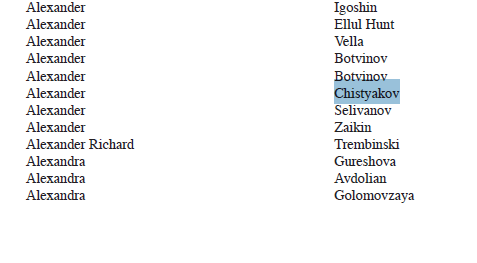
  • Sokolov and Family Granted Maltese Citizenship by Naturalisation — Gazzetta tal-Gvern ta’ Malta, No. 19,616Gazzetta tal-Gvern ta’ Malta 19,616

    THE following list of persons who have been naturalised/registered as citizens of Malta during January 2015 and December 2015, is being published for general information in accordance with the provisions of sub-regulation 14(2) of Subsidiary Legislation 188.03.

    Individuals named Alexander Chistyakov, Konstantin Sokolov are in the list.

    Credit: https://www.gov.mt/en/Government/DOI/Government%20Gazette/Documents/2016/08/Government%20Gazette%20-%202nd%20August.pdf

  • Sberbank will Take Up the $79M Project of Creating a Hotel on the Corner of Nevsky Ave and Malaya Morskaya Str.

    June 8, 2016 (kachkin.ru)

    The project of the hotel Jumeirah on Nevsky Prospect, 7-9, passed to Sberbank, which lent to the investors of the hotel. As in the past crisis, banks are collecting problem assets for debts. Sberbank will take over the project of creating a five-star hotel at the corner of Nevsky Prospect and Malaya Morskaya Street. In spring, the project was transferred to the bank that lent its investor – the company “IFG-Basis-Project”, which through the IFG Basis Foundation is associated with the ex-top manager of “Basel” Evgeny Tonkacheev and his business partner Konstantin Sokolov. The project is likely to be handled by Sberbank Capital, which manages assets transferred to the bank from debtors.

    Mortgage hotel

    IFG-Basis-Project LLC since 2010. According to the investment agreement with Smolny (http://whoiswho.dp.ru/cart/company/83905/), it is trying to turn into a five-star hotel a building with the area of 9.2 thousand m2 on Nevsky Prospect, 7-9, where Aeroflot’s central cash offices used to be located. The hotel was supposed to open its doors in 2014, but is still not ready. Although it has already been found The operator is Jumeirah Arab network. According to ” SPARK-Interfax (http://whoiswho.dp.ru/cart/company/2919428/)”, in April 2016 PAO became the owner of “IFG-Basis-Project” through several legal entities. “Sberbank”. So Wavelberg House, which was built in the early twentieth century for the bank, again becomes a banker. The press service of Sberbank confirmed that the bank got control over the asset “as part of the work with troubled debt.

    General Director of “IFG-Basis-Project” Ilya Sokolov noted that Sberbank has become a participant in the restructuring of accounts payable. “Sberbank with the involvement of outside construction experts completes the expertise of the project,” – they say in the press service of the bank, adding that in parallel, work is being done to find investors to complete the work, and the bank is considering the possibility of completing it independently. Arrangements with the Jumeirah operator remain in place.

    In addition to the rights to the investment project “IFG-Basis-Project” owns 1.6% of the building, the rest is owned by the city. Earlier, Sberbank opened two credit lines to the company – for $ 15 million and $10 million. Pledge on the loans were the rights to the investment agreement to create a hotel – his bank estimated at 5.09 billion rubles (approximately $79.3 million), but for the pledge was used a discount of 40% (a total of 3.05 billion rubles, (~$47.6 million). The deadline for fulfilling obligations under the contracts was only in 2023 and 2024. But it seems that the investor stopped servicing the loans.

    “Sberbank Capital” has already completed complex projects of borrowers. This division, which was created specifically to work with troubled assets in the previous crisis, completed two skyscrapers in Moscow City (http://whoiswho.dp.ru/cart/company/2938656/), the resort “Gorki-Gorod” and other facilities. 

    United Chicago.

    It is interesting that the final beneficiaries of the project on reconstruction of former airlines were unknown for a long time. He was connected then with billionaires Mikhail and Boris Zingarevich, and then with former Vice-Governor of St. Petersburg Yuri Molchanov, who denied his participation. But in the end it turned out that “IFG-Basis-Project” through the international fund IFG Basis belonged to Konstantin Sokolov and Evgeny Tonkacheev. The latter himself told about IFG Basis to the Chicago MBA alumni magazine. University (Chicago Booth Magazine) in 2014.

    Evgeny Tonkacheev was CEO and then Managing Director of Basic Element company Oleg Deripaska in 2001.

    (http://whoiswho.dp.ru/cart/person/729416/). In 2006, he headed Eastfield Investment Company (ZAO Eastfield). Through the Chicago University Alumni Association, Tonkacheev met Konstantin Sokolov and invited him to Eastfield. And in 2008 they left the company and founded IFG Basis Foundation.

    It is not clear whether the fund’s founders will participate in it now. Ilya Sokolov, commenting on this question, said that “the information that Sokolov

    Konstantin Sokolov and Evgeny Tonkacheev are co-owners of the Foundation, not true”. Boris Smirnov is also a co-founder of some companies associated with the Foundation’s projects. It was he who established IFG-Basis-Project in 2009, which was later reregistered as offshore. “As far as I know, this is just a lawyer who established the company. He did not participate in the project implementation,” Ilya Sokolov said.

    We need a new contract

    Under the investment agreement, IFG-Basis-Project transferred RUB 111 million to the treasury. The investor was to vacate the building himself, but the tenants’ resettlement was delayed. It did not take long to extend the investment agreement; it had to be completed in the pre-election period. In the summer of 2014 the hotel was not ready yet, and Georgy Poltavchenko, then acting governor, was outraged by the restructuring of the building. He did not like the parking device and the planned construction of the attic. By the way, the governor’s childhood memories are connected with the air ticket office building – he lived nearby, and his mother worked at air ticket offices.  At the time of the extension of the investment agreement was postponed, but in December the company was allowed to complete the project by June 2016. But the building is still surrounded by a blue building fence. The Investment Committee said that in early June, representatives of “IFG-Basis-Project” said at a special meeting that they hoped to complete the project independently.

    The committee specified that after the transfer of rights to the project to Sberbank, the investor has not applied for an extension, but in any case the existing contract will not be extended. If there are grounds for granting the building in a targeted way, a new contract will be concluded with the investor. “The term of the new contract will be determined by the investor himself. The maximum term can be 10 years”, – they say in the committee, pointing out that most of the work has already been completed.

    More problems

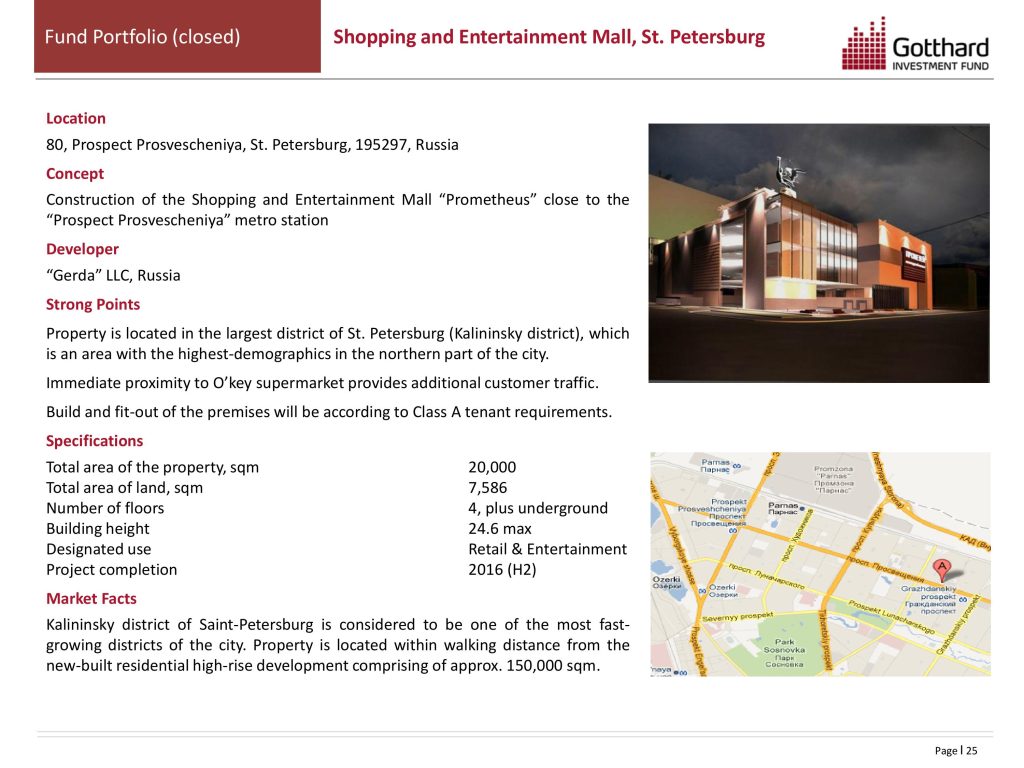
    Simultaneously with “IFG-Basis-Project” to Sberbank (http://whoiswho.dp.ru/cart/company/27508/) has passed the project of LLC “Gerda” on construction of a cinema-concert complex on a place of a cinema “Prometheus” on prospect Prosveshchenie, 80. By indirect signs, this project was also handled by IFG Basis beneficiaries.

    The founder of Gerda was Boris Smirnov, and then it became registered for offshore locations. Ilya Sokolov confirmed that IFG Basis was a shareholder of the project, but minority.

    The number of such examples when the rights to real estate or investment projects are transferred to banking structures is growing. For example, VTB (http://whoiswho.dp.ru/cart/company/17861/) in late March became the owner of the Eurasia Tower with an area of 193 thousand m2. The high-rise in Moscow city was transferred to the bank as a result of the debt of Suleiman Kerimov’s structures. Alfa Bank is trying to get control over the shopping center “Fili” through the court, also against the debt.

    In retail banks the situation is the same: “VTB 24” said that recently began to receive more objects pledged, mainly apartments.

    The number of cases requiring recovery on the pledged property is growing. Dmitry Nekrestyanov, head of the real estate and investment practice at Kachkin & Partners, calls it a forced measure. This is only an indicator of the crisis: if there is no money to be foreclosed on, we have to take property,” he says, “At the same time, any investment project is a non-core activity of the bank and is more of a headache than some real benefit”.

    Credit: https://www.kachkin.ru/dp-ru-08-06-2016/

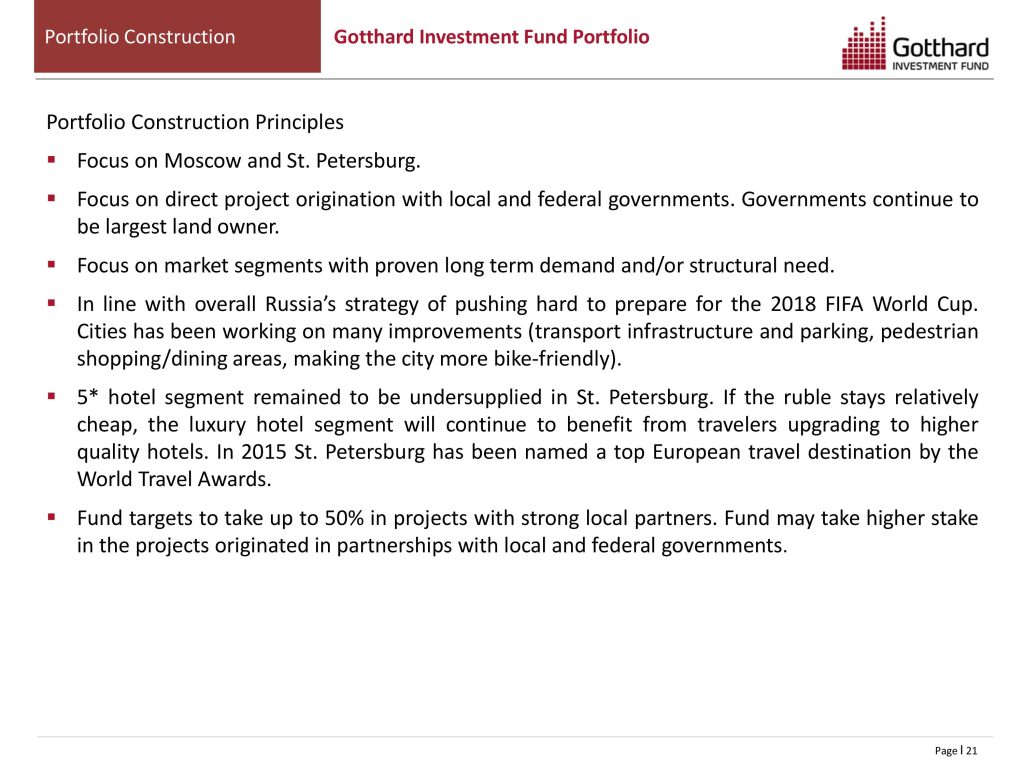
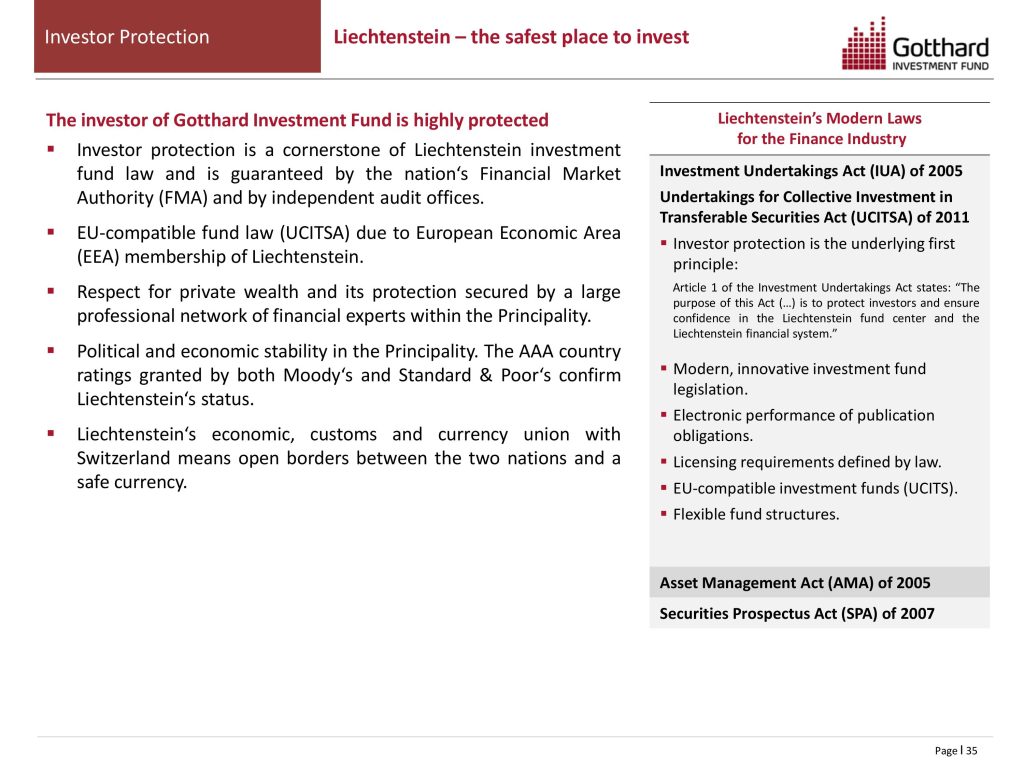
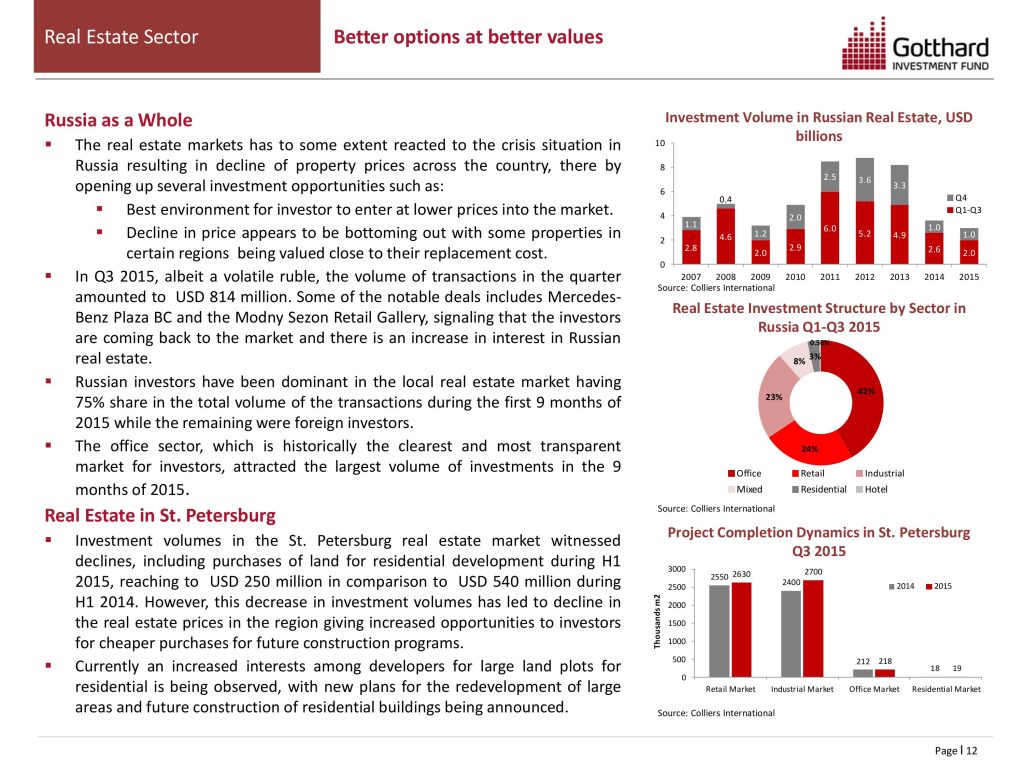
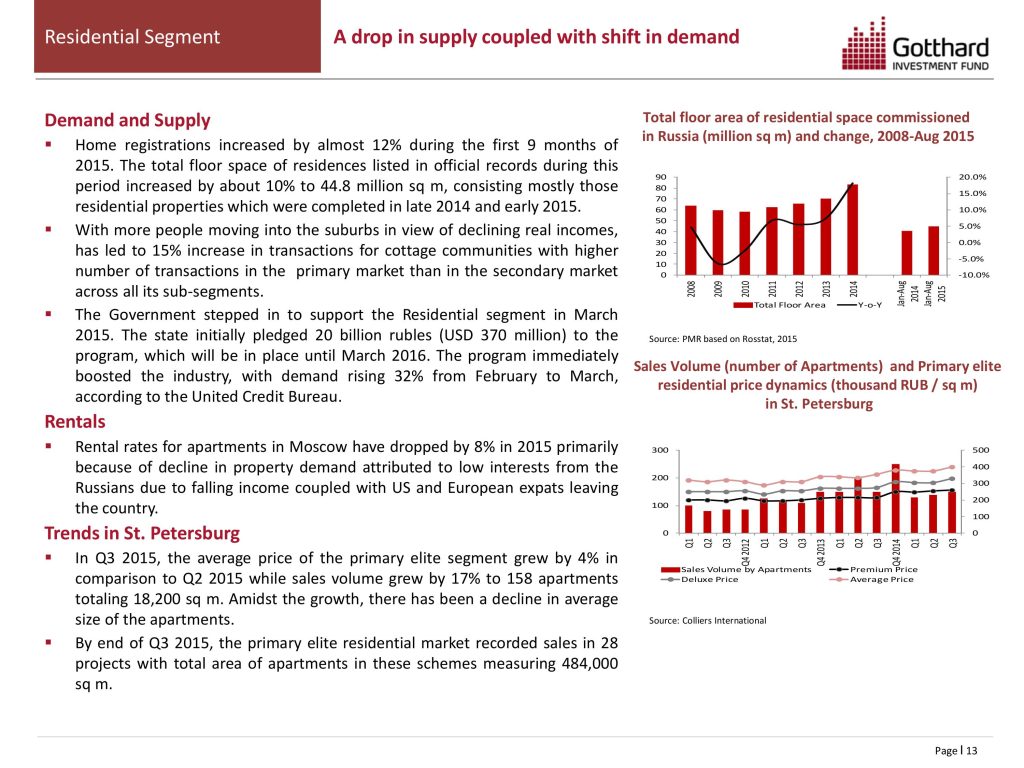
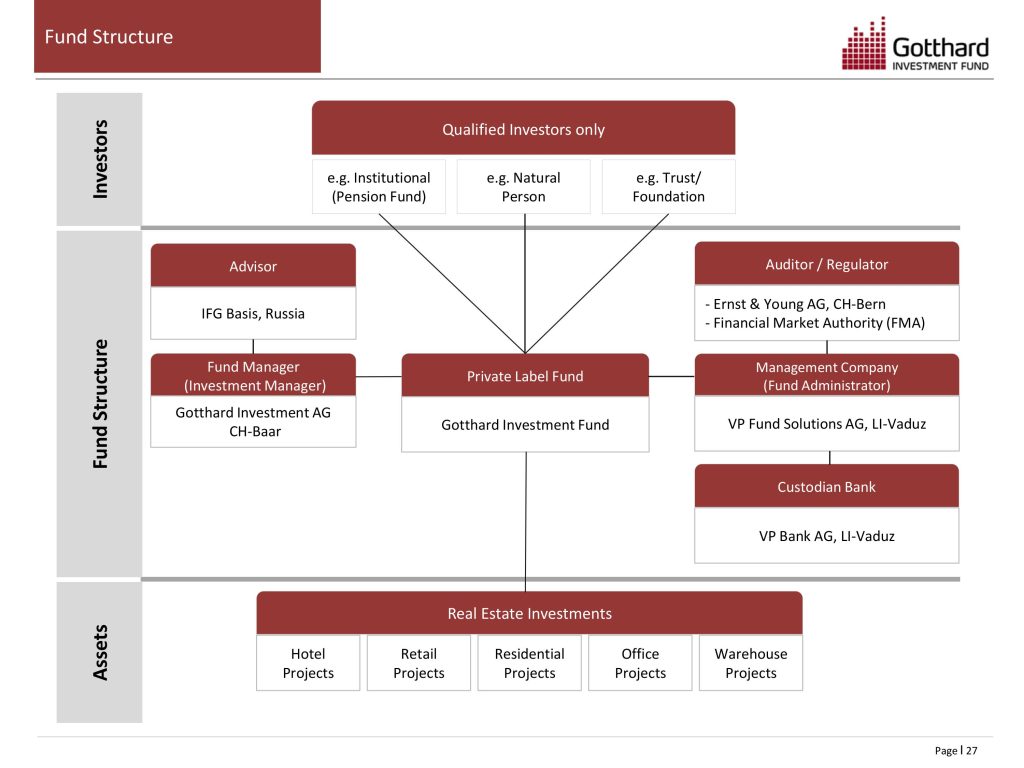
  • Gotthard Investment Fund’s St. Petersburg, Russia Portfolio (2015)

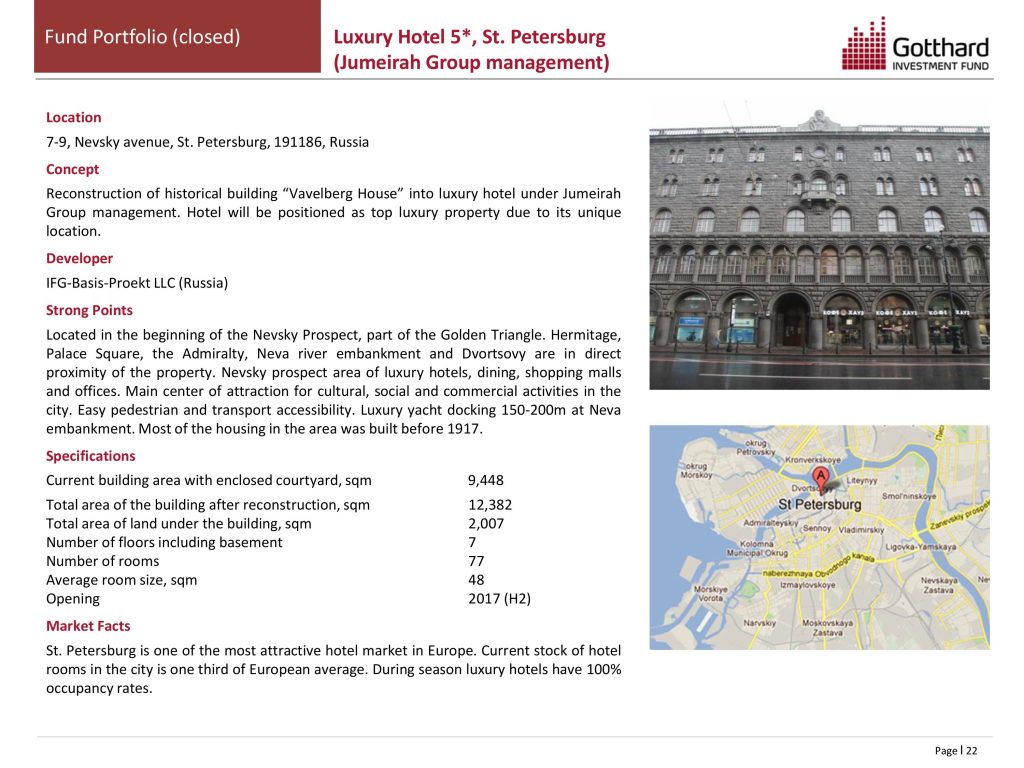
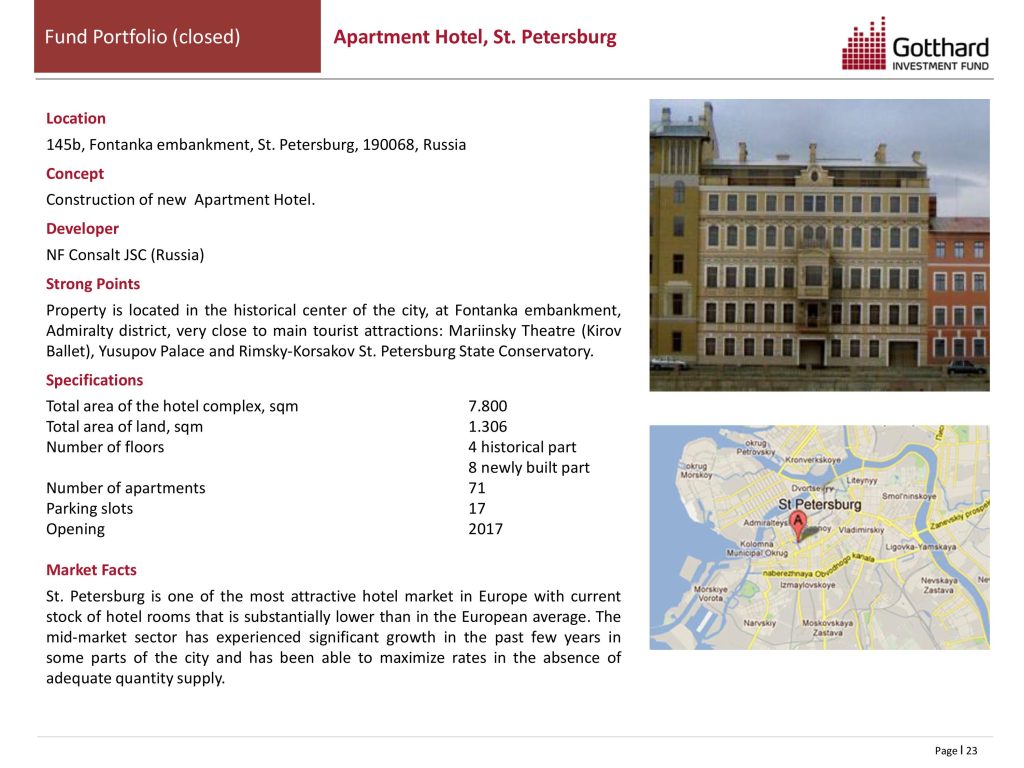
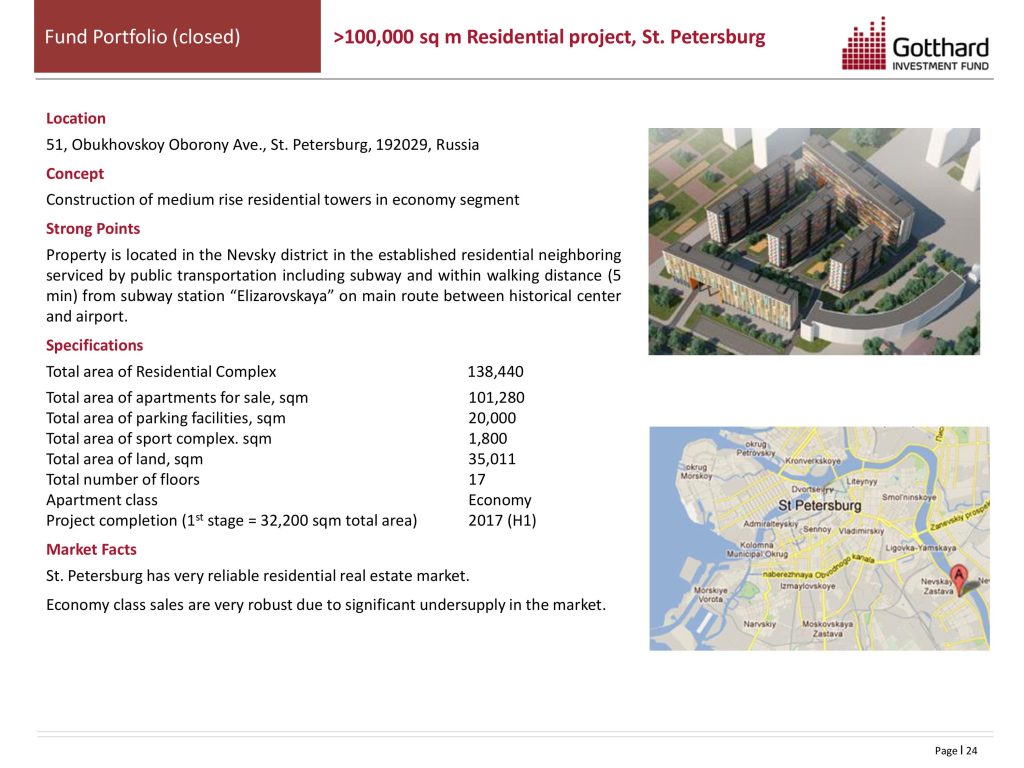
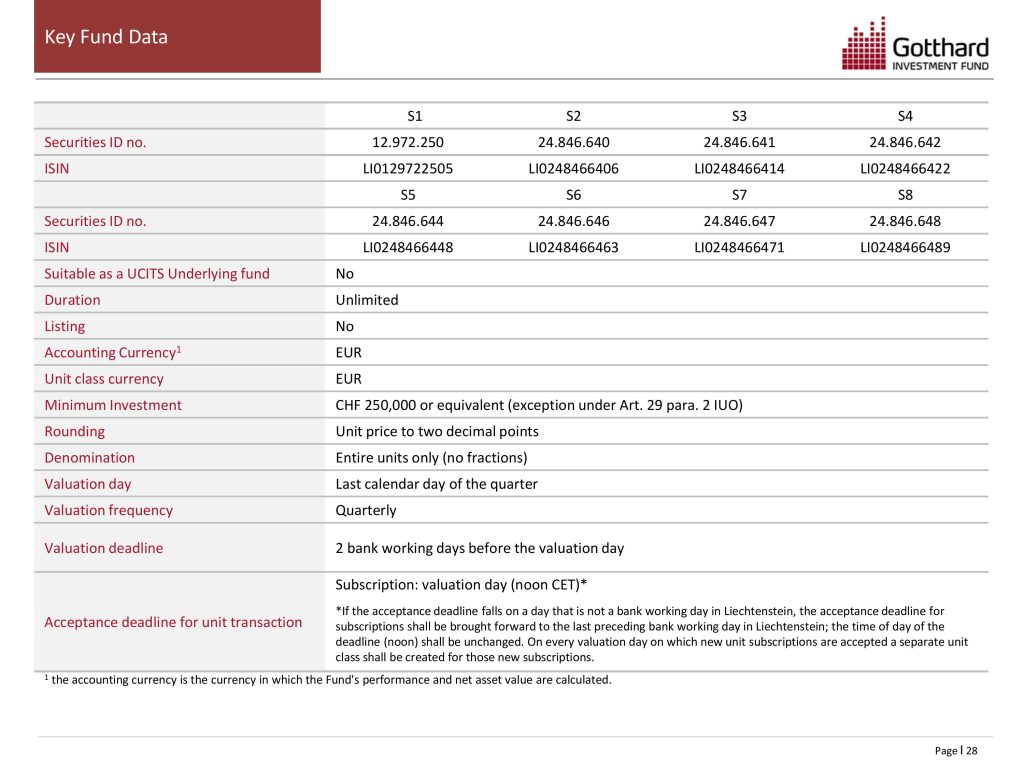
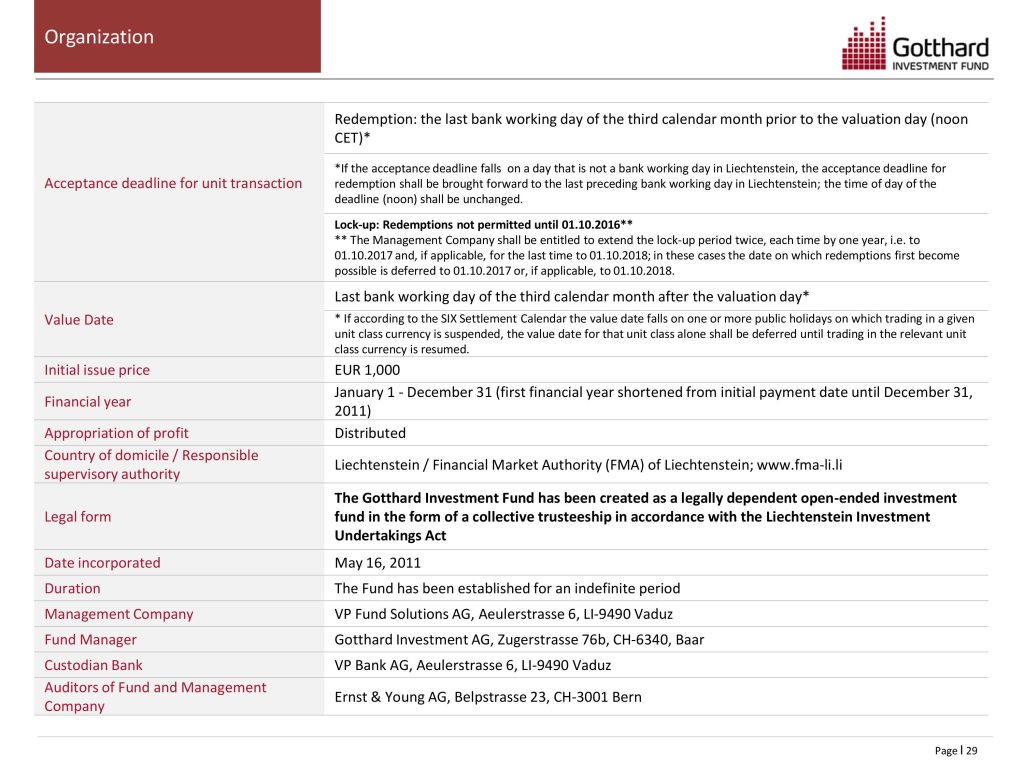
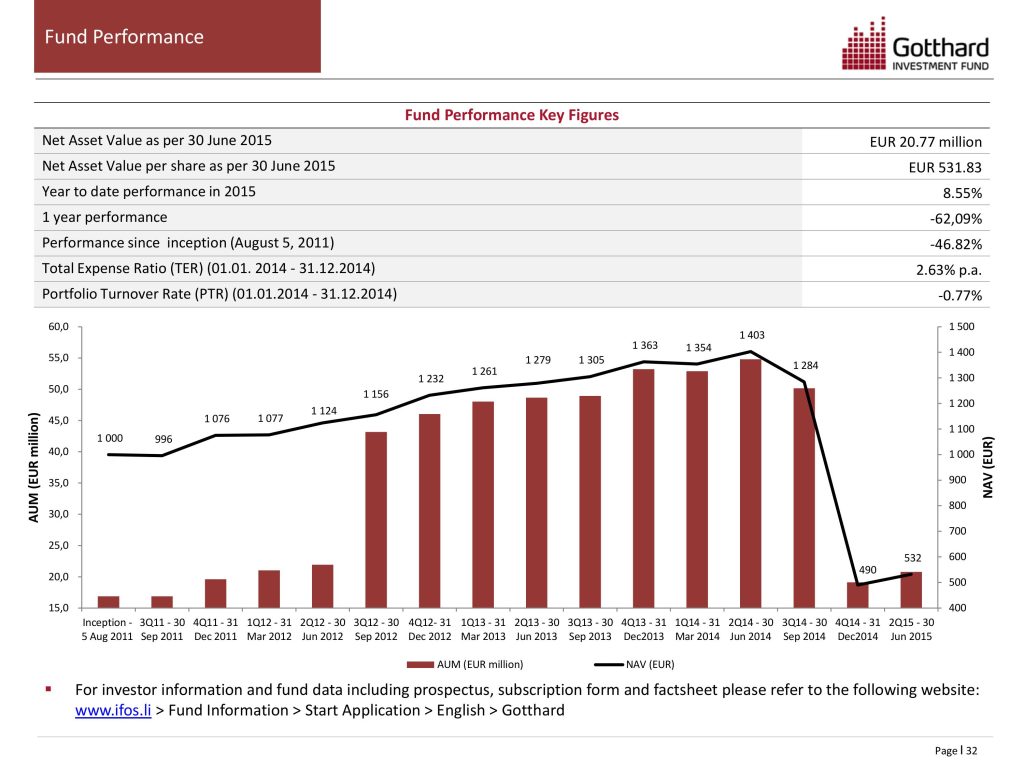
    A snapshot from the fund’s Q2 2015 pitchbook, managed by Konstantin Sokolov and Roland Raeber.

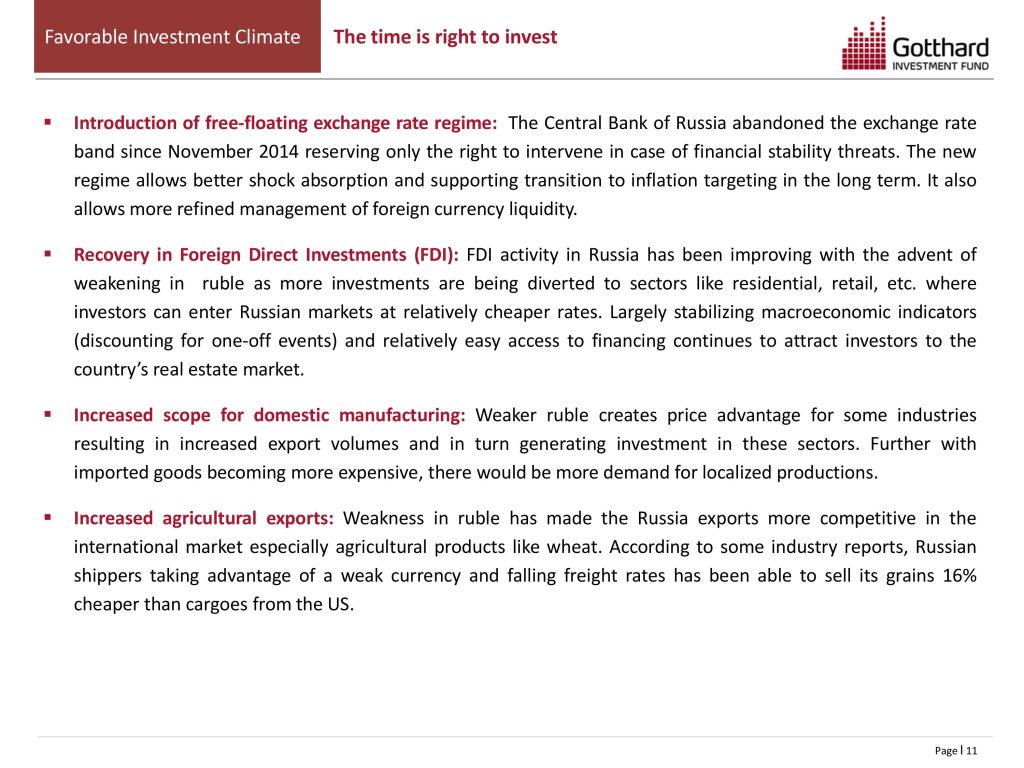
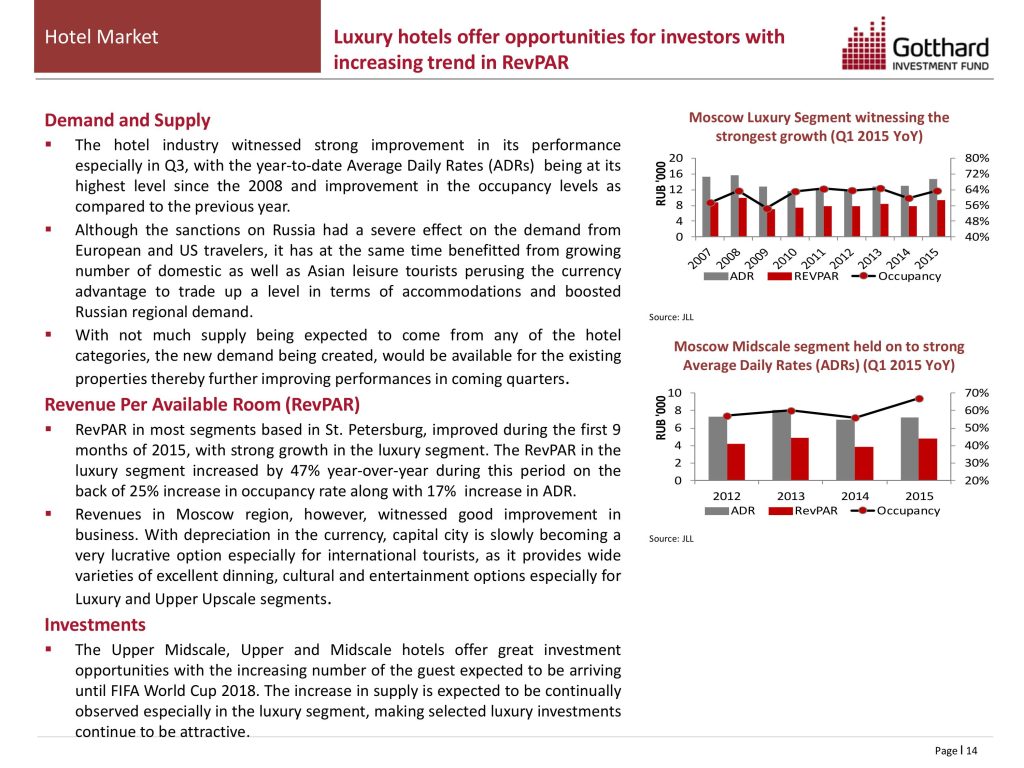
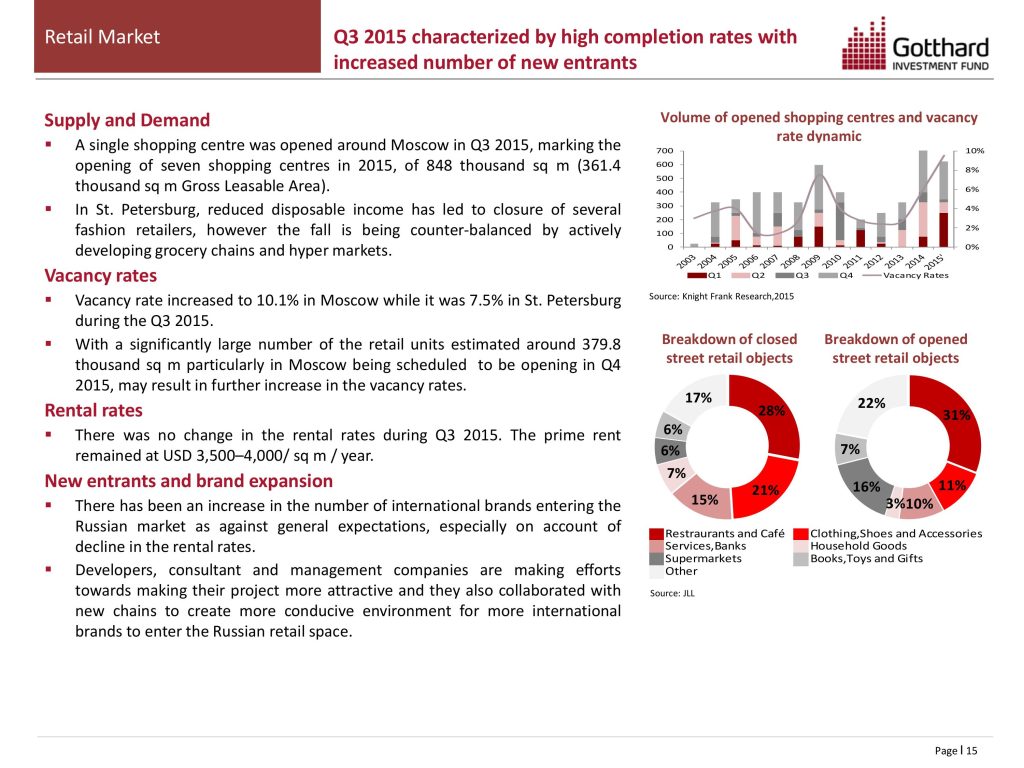
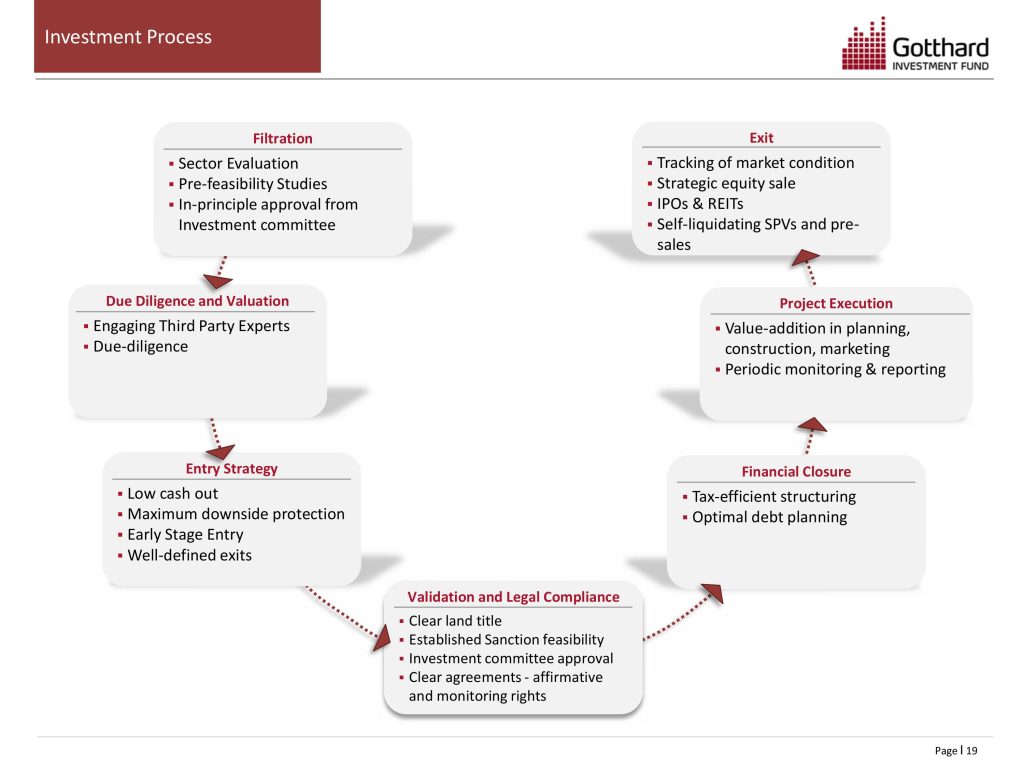
    Back in 2015, the Liechtenstein-based Gotthard Investment Fund — where Konstantin Sokolov served as Vice-Chairman and Managing Partner — was actively raising money for Russian real estate. According to their investor presentation, the fund had only four active projects in St. Petersburg, Russia:

    1. Vavelberg House (7-9 Nevsky Ave) — reconstruction of a historic building into a luxury hotel under Jumeirah Group management;
    2. Fontanka 145b — a new 71-unit apartment hotel near the Mariinsky Theatre;
    3. Kompressor Komplex (51 Obukhovskoy Oborony Ave) — construction of economy-class residential towers;
    4. Prometheus Mall (80 Prospect Prosvescheniya) — a shopping and entertainment center in the Kalininsky district, and a fifth project not detailed in the excerpt.

    According to the report, Sberbank was the fund’s “preferred lending partner,” offering exclusive access to financing, better rates, and even joint lending operations. The partnership also gave Gotthard preferential access to distressed real estate assets that Sberbank had acquired as collateral from its borrowers — a classic setup for picking up assets at distressed prices with state-backed firepower.

    In 2020, the fund was successfully liquidated. A quiet end to a once-ambitious Russia-focused investment vehicle.

  • Jumeirah Group Left Homeless in St Petersburg

    July 31, 2014

    Companies have not extended the deadline for the reconstruction of the building at the intersection of Nevsky and Malaya Morskaya.

    Smolny has not extended the deadline for the renovation of the former Trade Bank building on the corner of Nevsky Prospekt and Malaya Morskaya Street, which is slated to house a hotel operated by the international hotel operator Jumeirah Group. Acting Governor Georgy Poltavchenko expressed concerns regarding several aspects of the work, instructing Vice Governor Marat Oganesyan to discuss the project parameters with the investor. Experts believe these are merely temporary setbacks that will not affect Jumeirah’s plans for the project in Russia.

    At yesterday’s meeting of the St. Petersburg government, the issue of extending the hotel complex project’s deadline until the end of June 2016 was discussed. The investor (IFG-Bazis-Proekt LLC) was to be fined 6.7 million rubles for the delay in handing over the building.

    Acting Governor Georgy Poltavchenko expressed dissatisfaction yesterday with the pace of reconstruction work on the building and expressed doubts about whether the facility would have sufficient parking spaces, as well as whether conservation laws would allow for a swimming pool to be located on the seventh floor.

    However, this did not happen due to a decision by Acting Governor Georgy Poltavchenko, who was dissatisfied with the pace of work and expressed doubts about the facility’s adequate parking space and whether conservation laws would allow for a swimming pool on the seventh floor. Mr. Poltavchenko instructed Marat Oganesyan to investigate the matter, tentatively postponing the issue of extending the deadline.

    According to Mikhail Demidenko, Chairman of the Construction Committee, the volume of work completed on the façade and interior framework has reached approximately 20%.

    Jumeirah Group said it is currently in talks with its partner, IFG-Basis-Project, but has no influence on the current situation.

    As Interfax quoted Ilya Sokolov, CEO of IFG-Basis-Proekt LLC, as saying, “the company sees no reason to revise the project’s implementation timeline, and the issue of extending the reconstruction period will be resolved positively.” “All the issues raised by the governor have been carefully addressed by the investor in the project documentation, which has received a positive conclusion from the federal state expert review and has been fully approved by the Committee for State Control, Use, and Protection of Historical and Cultural Monuments (KGIOP),” the agency quoted him as saying.

    As Kommersant previously reported, the new Jumeirah hotel will be located in the former Trade Bank building on the corner of Nevsky Prospekt and Malaya Morskaya Street. In May 2010, Valentina Matviyenko’s government awarded this building, along with several other city-center landmarks (two of which went to the companies of businessmen Boris and Mikhail Zingarevich), for renovation into hotels. Experts at the time predicted that the properties would have fetched at least $90 million at auction. Under the investment agreement, IFG-Bazis-Proekt vacated the building and transferred approximately 100 million rubles to the city treasury. As Mr. Sokolov told Kommersant, the hotel will have 74 rooms with an average size of over 45 square meters. $90 million will be invested in the project, $40 million of which will go toward restoration work. The hotel’s opening was scheduled for 2015. The base price for accommodation at Jumeirah Group hotels is $1,400-1,500 per room per day. According to the investor’s estimates, the average room rate in a five-star hotel in St. Petersburg is €450.
    Jumeirah Group, founded in 1997, manages 22 premium hotels and resorts, eleven of which are located in the Persian Gulf region, six in Europe, and five in Asia. Another 15 projects are under construction. According to SPARK-Interfax, IFG-Basis-Project was previously owned by a subsidiary of IFG Basis—the Cypriot offshore company Applerson Holding Limited, which in 2009, along with Plaza Lotus Group, owned by Boris and Mikhail Zingarevich, simultaneously announced their plans to expand into the St. Petersburg hotel market at Smolny. The former head of IFG-Basis-Project, Danat Bulavko, also headed the Zingarevichs’ company, Adytum. However, the company denies their involvement in IFG-Basis-Project.

    According to Colliers International in St. Petersburg, at the end of June 2014, the St. Petersburg hotel real estate market included 135 properties with a total of 19.3 thousand rooms (not including mini-hotels, departmental hotels, and hostels).

    At the beginning of the third quarter of 2014, eight hotels with a total of approximately 1,400 rooms were under active construction in St. Petersburg, and their appearance on the market is expected by the end of 2016.

    David Jenkins, Head of Hospitality at JLL, believes that Jumeirah, like other international operators, is unlikely to delay their development plans and entry into the Russian market due to the current political and economic situation. “Regarding the specific project in St. Petersburg, the hotel operator has no influence on this process, so all they can do is wait and see until the issue between the administration and the developer is resolved. Then they can draw conclusions and take concrete steps. Currently, we have not observed any decline in tourist flow to St. Petersburg compared to the same period last year. However, we will only be able to summarize the results and comprehensively analyze the city’s tourist occupancy during the summer period at the end of August. Then we will be able to track the dynamics and provide a further forecast for the situation,” he said.

    Yulia Chayun

    Credit: https://www.kommersant.ru/doc/2535828